-
×
 Gengar EX - XY Phantom Forces - 2014 Pokemon - PSA 10
1 × $1,999.99
Subtotal: $1,999.99

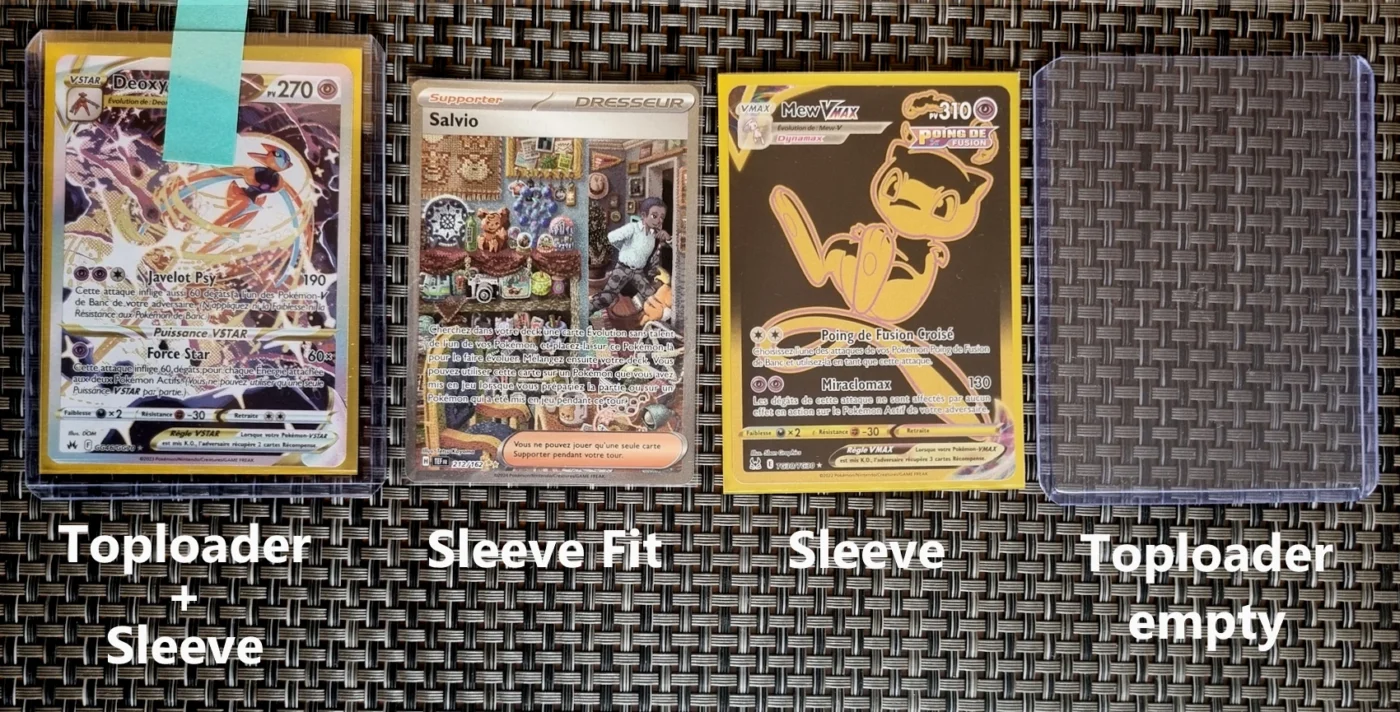
If you are a card collector (Pokémon cards, Magic: The Gathering, Yu-Gi-Oh!, sports cards, etc.), you know how important it is to protect them to preserve their condition and value. But between toploaders, sleeves (Slim Fit, Perfect Fit…) and other accessories, it is not always easy to know which solution to choose.
In this article, we will look at the different preservation methods and their advantages.
Sleeves (or card protectors) are the first line of defense. They prevent scratches and rubbing. There are several types:
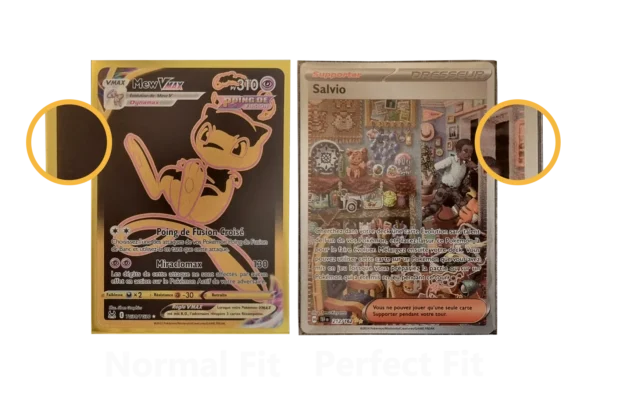
🔹 Perfect Fit (ultra-tight sleeves)
• Advantages :
Perfectly envelopes the card without leaving any space.
Ideal for basic protection before putting the card in a toploader or binder.
• Disadvantages :
Difficult to remove without damaging the card if not careful.
🔹 Slim Fit (standard sleeves)
• Advantages :
Easier to slide in and out than Perfect Fit.
Available in different thicknesses (some are even UV-resistant).
• Disadvantages :
Less fitted than Perfect Fit, so a bit more play possible.
🔸 Double Sleeving (maximum protection)
For very valuable cards, some collectors use two sleeves:
1. A Perfect Fit (for inner protection).
2. A standard Slim Fit over it.
→ This method offers excellent resistance to water and dust.
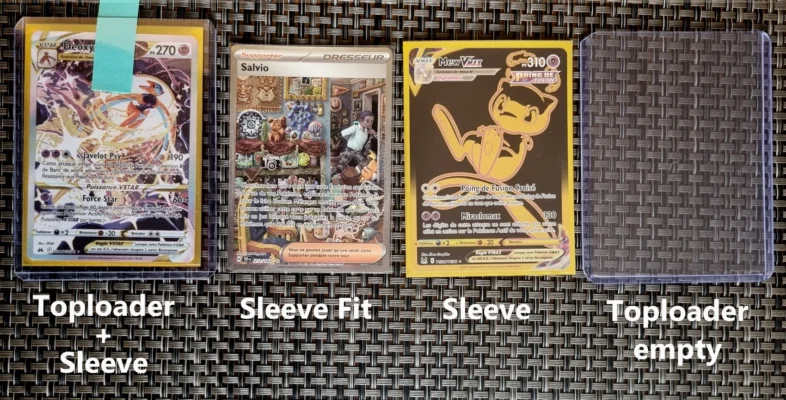
Toploaders are rigid plastic cases that offer enhanced protection against shocks and bends.
• Advantages :
Maximum protection against shocks and pressure.
Ideal for sending cards by mail or for display.
• Disadvantages :
More bulky than sleeves alone.
Some low-end models can scratch cards if they are not already sleeved.
💡 Tip :
Always use a sleeve before sliding the card into a toploader to avoid micro-scratches.
If you have many cards to store, binders (folders) are a good solution.
🔹 Binders with soft pages
• Advantages :
Convenient for flipping through your collection.
Cheaper than rigid folders.
• Disadvantages :
Risk of creasing if handled poorly.
🔸 Rigid binders (with hinges)
• Advantages :
Better protection against shocks.
Often equipped with a secure closure.
• Disadvantages :
Heavier and more expensive.
⚠️ Important:
Prefer ringless binders to avoid pressure marks on the cards.
Use UV-protected pocket pages to prevent yellowing.
💼 Storage boxes: To store your loose cards (ideally with dividers).
🌡️ Humidity control: Silica gels help prevent moisture that can warp cards.
🚫 Avoid direct light: UV rays cause cards to lose their colors.
• For basic protection → Sleeve only.
• For enhanced protection → Perfect Fit + Toploader.
• For a complete collection → Rigid binder with premium pages.
FAQ
1. What is the difference between a toploader, a slim fit sleeve and a perfect fit sleeve?
A toploader is a rigid plastic holder that protects a card from bending and pressure. A slim fit sleeve is a thin, soft sleeve that guards against scratches and dust. A perfect fit sleeve is a snug inner sleeve that holds the card tightly and is often placed inside a toploader or used before grading.
2. Should I use a sleeve and a toploader together?
Yes, for valuable cards. Slide the card into a sleeve first so the surface and edges are protected, then place it in a toploader for rigid protection. This is a good habit for rare pulls straight out of the pack.
3. Which option is best for a card I plan to grade?
Use a perfect fit sleeve, then a toploader. The snug sleeve keeps the card from sliding and rubbing, and the toploader keeps it flat. Avoid tape, rubber bands and tight stacking.
4. How should I store sleeved cards long term?
Keep them upright in a closed storage box or binder, away from sunlight, heat and humidity. Do not overfill boxes, because pressure can bend cards over time, and do not store them loose in drawers or on top of each other.
